

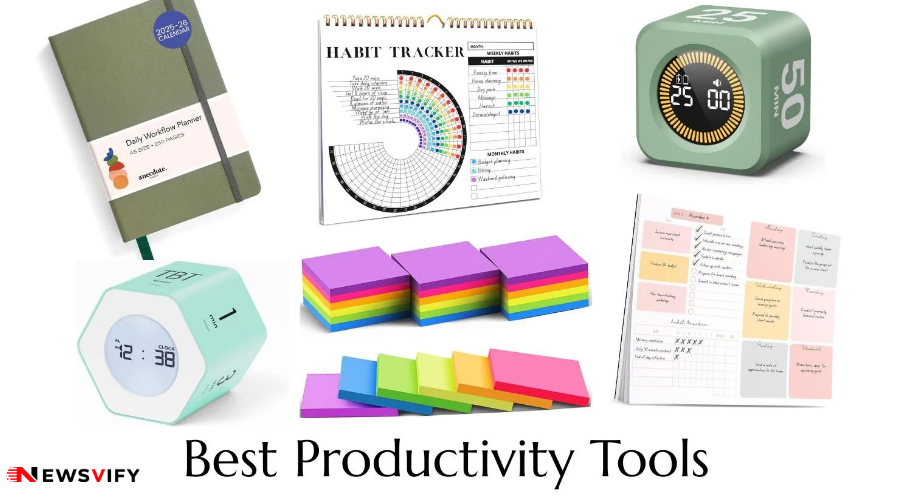
Every year brings a fresh wave of apps promising to fix your focus, and every year most of them end up abandoned within a month. The truth is that productivity tools only work when they’re paired with habits that actually stick — starting with something as simple as a consistent morning routine. Here’s how to combine the two without turning your day into a rigid system you’ll quit by February.
Productivity Tools Worth Actually Using
Not all productivity tools solve the same problem, which is why stacking five overlapping apps usually backfires. Pick tools based on where your time actually leaks, not based on what’s trending.
| Problem | Type of Tool | What to Look For |
|---|---|---|
| Losing track of tasks | To-do list or task manager | Simple capture, minimal setup friction |
| Getting distracted mid-task | Focus/website blocker | Scheduled blocking, not just manual toggling |
| Time disappearing without a trace | Time tracker | Automatic tracking over manual logging |
| Forgetting recurring tasks | Habit tracker | Visual streaks, low daily effort to log |
- Start with one tool, not five — stacking too many productivity tools at once is a common reason people abandon all of them within weeks.
- Match the tool to your actual bottleneck rather than the one with the flashiest interface.
- Review usage monthly and drop anything you’ve stopped opening regularly.
- Free versions are often enough — most people don’t need premium tiers of productivity tools until their needs get more complex.
Building a Morning Routine That Actually Sticks
A morning routine doesn’t need to start at 5 a.m. with cold plunges and meditation to be effective — the research on morning habits points less at any specific ritual and more at consistency and reducing the number of decisions you have to make early in the day.
- Decide the night before what the first task of the morning will be, removing decision fatigue before you’re even fully awake.
- Keep the routine short — a 15-minute morning routine you actually complete beats a 90-minute one you skip half the time.
- Anchor it to something you already do, like brushing your teeth or making coffee, rather than trying to build an entirely new habit from scratch.
- Protect the first hour from notifications if your job allows it; reactive inboxes are one of the fastest ways to derail an intentional morning routine.
How Productivity Tools and a Morning Routine Work Together
The most effective setups pair a lightweight morning routine with one or two well-chosen productivity tools, rather than treating them as separate systems. A quick morning review of a task manager — one of the simplest productivity tools available — takes the guesswork out of what to focus on first, which reinforces the routine instead of competing with it.
Protecting Focus Beyond the Morning
Productivity isn’t just about the first hour of the day — it’s also about protecting attention throughout it. If notifications and screen time are eating into focus well past the morning, it’s worth looking at what a longer break can do; the same instinct driving demand for digital detox retreats applies just as well to a single distraction-free afternoon at home.
For remote workers building out a productivity setup, security matters as much as focus — our breakdown of the best free VPN for USA users covers protecting your connection while working from coffee shops or shared spaces.
As more companies pilot flexible schedules, including the four-day work week some employers are testing, a solid morning routine and the right productivity tools become even more valuable for making the most of fewer working days.
Conclusion
Productivity tools and a morning routine work best as a pair, not as competing systems — a short, consistent morning routine sets the tone for the day, and one or two well-matched productivity tools keep that momentum going once the day gets busy. Resist the urge to overhaul everything at once; small, sustainable changes to both tend to outlast an ambitious system you abandon within a month.


