

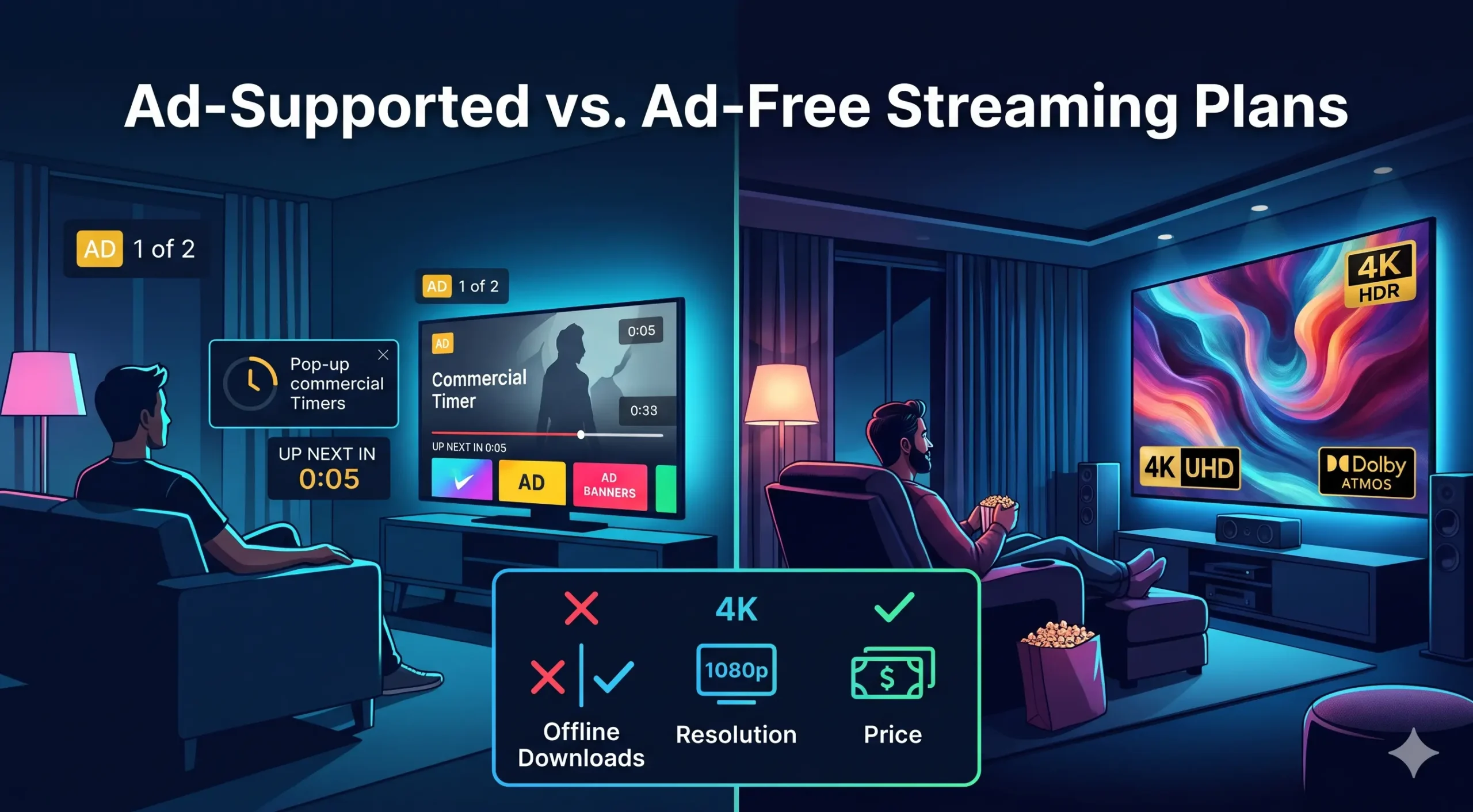
Streaming services are widening the price gap between their ad-supported and ad-free tiers, forcing US viewers to make a calculated choice. While opting for a basic ad-supported plan can easily save you over $100 a year per platform, the trade-offs go well beyond a few commercial breaks. Before downgrading to save money, it is critical to compare how ad loads, offline viewing limits, capped video resolution, and hidden content exclusions will actually impact your daily viewing experience.
The Widening Price Gap in Streaming
In 2026, the financial divide between watching commercials and avoiding them is larger than ever. Major subscription video-on-demand (SVOD) platforms have strategically increased the prices of their premium ad-free tiers while keeping base ad-supported tier prices relatively stable. The goal is straightforward: push cost-conscious users into ad-supported plans, which are highly profitable due to lucrative advertising revenue [1].
For a household subscribing to three or four major services—such as Netflix, Max, Disney+, and Hulu—choosing the ad-supported route can cut monthly streaming bills by roughly 40% to 50%. However, these savings come at the direct expense of convenience and premium technical features.
Ad Interruptions: How Much Time Are You Losing?
The most obvious drawback to a cheaper plan is the return of the commercial break, but the actual time you lose varies wildly depending on the service you are watching. Not all ad-supported tiers are created equal when it comes to interruption frequency and total ad load.
According to late-2026 testing across major platforms, viewers experience vastly different ad loads [2]:
- Netflix: Generally maintains a lighter total ad load, averaging around 2 to 4 minutes of commercials per hour. However, these ads are often distributed in frequent, shorter breaks, which can disrupt the pacing of dramatic television.
- Disney+ and Hulu: Often skew heavier, with average ad loads exceeding 8 minutes per hour on some programming [2]. Viewers transitioning from ad-free Disney+ often report these interruptions feel significantly more intrusive during feature-length movies.
- Prime Video: Incorporates ads by default for base subscribers, featuring a mix of pre-roll ads (before the show starts) and mid-roll interruptions.
Feature Restrictions: What Ad-Supported Plans Exclude
The “hidden costs” of ad-supported streaming lie in the features these platforms strip away. You are not just paying to remove commercials; you are paying to unlock the platform’s full capabilities.
Offline Downloads and Simultaneous Streams
If you travel frequently, commute by train, or want to entertain kids on an iPad during a road trip, an ad-supported plan will likely disappoint you. Most major platforms—including Netflix and Max—completely disable the offline download feature on their ad-supported tiers [3]. Furthermore, basic plans often restrict the number of devices that can stream simultaneously, dropping from three or four concurrent streams on premium plans to just two on base plans.
Video Resolution Limits (1080p vs. 4K)
For home theater enthusiasts, video quality is a major differentiator. Ad-supported tiers generally cap video resolution at standard High Definition (1080p). If you want to take advantage of your 4K television, High Dynamic Range (HDR), or Dolby Atmos spatial audio, platforms like Netflix and Max lock these premium technical specs strictly behind their most expensive, ad-free tiers [3].
Content Exclusions and Licensing Lockouts
Perhaps the most frustrating surprise for consumers downgrading their plans is discovering that they no longer have access to the entire streaming catalog. Due to legacy third-party licensing agreements, services like Netflix and Hulu cannot legally play ads over certain syndicated movies and shows. As a result, these titles are “locked” or hidden entirely if you are on an ad-supported tier. While original content is always available, a portion of licensed fan-favorite movies may be inaccessible until you upgrade.
Which Streaming Tier is Right for You?
Choosing the right plan ultimately comes down to your viewing habits:
- Choose Ad-Supported If: You use streaming services mostly for background noise, watch casual sitcoms or reality TV where commercial breaks feel natural, or strictly need to minimize your monthly entertainment budget.
- Choose Ad-Free If: You are a heavy binge-watcher, you frequently travel and require offline downloads, you want 4K HDR quality for movie nights, or you are easily frustrated by mid-scene interruptions.
Check out the below categories
Frequently Asked Questions
Do ad-supported streaming plans include all the same movies and shows?
No, not always. While you will always have access to a platform’s original programming, certain third-party movies and shows are excluded from ad-supported tiers due to strict licensing agreements that prohibit commercial interruptions.
Can you download movies on an ad-supported plan?
Typically, no. The ability to download content for offline viewing on airplanes or commutes is almost universally reserved for premium, ad-free tiers.
Which streaming service shows the most ads?
Based on late-2026 ad-load test results, Disney+ and Hulu consistently feature higher average ad minutes per episode (often exceeding 8 minutes per hour) compared to platforms like Netflix, which averages closer to 2 to 4 minutes [2].
Sources and References
- [1] StreamTV Insider, “Major SVODs widen price gap between ad-supported ad-free plans,” August 24, 2026. https://www.streamtvinsider.com/
- [2] Gadget Hacks, “Streaming Services Showing More Ads: 7-Service Test Results,” September 9, 2026. https://gadgethacks.com/
- [3] CNET, “Best Streaming Services of 2026,” October 15, 2026. https://www.cnet.com/


