



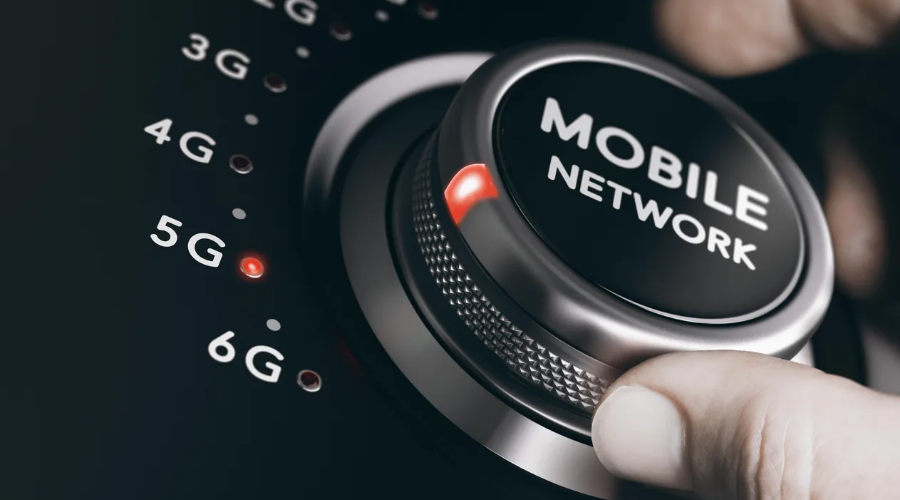
India has achieved one of the world’s fastest 5G deployments and the country is already laying the groundwork for the next generation of wireless technology as well. When it comes to a discussion between 5G vs 6G in India in 2026, there is a lot to be said.
The government is currently working on the research and development stage for 6G’s rollout in India, but the commercial deployment of it is expected closer to 2030.
5G in India in 2026
While discussing 5G vs 6G in India in 2026 is important, let us first look at the 5G network that India currently works on.
Ever since 2022, the rollout of the 5G network has expanded dramatically to the point where, according to the Ministry of Communication’s Press Release:
- It is now available in all the states and union territories
- 99.9% of India’s districts now have access to 5G networks
- More than 5.23 lakh 5G Base Transceiver Stations have been deployed nationwide as of February 2026
5G’s Coverage In India in 2026:
India’s 5G network reaches almost the whole country at this point. Some of the biggest and most common telecom operators are:
- Bharti Airtel
- Reliance Jio
- Vodafone Idea
- BSNL (expanding 4G and preparing for future upgrades as well; mostly used in landlines)
While discussing 5G vs 6G in India in 2026, it is important to note that 5G also supports applications such as:
- HD video streaming
- Cloud gaming
- Smart manufacturing
- Precision agriculture
- Telemedicine
- Fixed Wireless Access broadband
Despite all of this progress, India is a nation where 4G and 3G still co-exist with 5G especially in rural and legacy-device areas.
What is 6G, Exactly?
When it comes to 5G vs 6G in India in 2026, 6G is the next generation of mobile communications which will eventually succeed 5G.
Even though the global standards are under development for the 6G rollout in India, it is still expected that the rollout will deliver:
- Multi gigabit to terabit level speeds
- Ultra low latency
- AI native networking
- Integrated sensing and communication
- Better energy efficiency
- Massive support for connected devices
6G’s Rollout in India:
The nation has not yet started the commercial deployment of 6G’s rollout in India.
It is currently being focused majorly on:
- Research and development
- Global standards participation
- Indigenous technology
- University collaborations
- Industry partnerships
While discussing the 5G vs 6G in India in 2026, we also need to discuss the recent government initiatives for 6G which include:
- More than 100 dedicated 5G labs have been established across educational institutions so that the rollout of 6G will become even easier.
- 104 approved 6G research projects are currently underway according to the telecom Technology Development Fund.
- India is also actively participating in developing global 6G standards for the first time.
The Prime Minister of India, Mr. Narendra Modi also mentioned in July 2026 that India is actively working towards 6G’s rollout in India and challenging its own limits when it comes to 5G vs 6G in India in 2026.
How Will 6G Be Different?
The debate between 5G vs 6G in India in 2026, leads to an important question of how 6G will change the future.
The potential applications of 6G is not just limited to smartphones, but also:
- Holographic communication
- Extended Reality
- Digital twins
- Autonomous transportation
- Smart cities
- AI powered healthcare
- Industrial automation
- Space-air-ground integrated communications
5G vs 6G in India in 2026: A Difference
| Feature | 56 | 6G (Expected) |
| Availability | Commercial across India | Research and Development |
| Peak Speed | Up to several Gbps | Potentially 10 Gbps to 1 Tbps |
| Latency | Around 1-10 ms | Target below 1 ms |
| AI integration | Limited | AI native networks |
| Commercial Launch | Already available | Expected around 2030 |
| Main Focus | Faster mobile network | Intelligence and immersive connectivity |
The biggest difference between 5G vs 6G in India in 2026 will be within what each network focuses on.
India’s Mobile Network and Its Future
India’s telecom strategy is mainly focused on expanding the current 5G’s coverage in India, its infrastructure and preparing for next generation connectivity.
The current priorities also include:
- Increasing the rural 5G coverage and connectivity
- Expanding fiber connectivity across India
- Supporting indigenous telecom equipment as well
- Developing 6G intellectual property
- Building semiconductors and electronics manufacturing
- Strengthening the telecom research under the Bharat 6G Vision and National Broadband Mission 2.0
What Are Some of The Main Challenges Ahead:
While talking about 5G vs 6G in India in 2026, it is true that India has progressed, but it also has multiple challenges such as:
- How to expand the rural infrastructure?
- Upgrading the fiber backhaul
- Managing spectrum efficiently
- Ensuring affordable consumer devices
- Reducing the cost of equipments
- Developing a skilled workforce for the future of 6G and its own technological updates
Should Consumers Wait for 6G?
For most of the users, no.
5G in India already delivers:
- Fast downloads
- Smooth streaming
- Low latency gaming
- Reliable video calls
- High speed broadband in most areas and more
Between 5G vs 6G in India in 2026, 6G will be an upgrade but currently, 5G is a good choice to invest and purchase since it is readily available as well.
Final Thoughts:
The story of 5G vs 6G in India in 2026 is not about replacing one technology with another overnight. It is about marking a simple transition that is globally being done because of advancements in technologies.
India’s mobile network in the future looks extremely bright, advanced and efficient but currently investing in 5G is the better (and only) option.




