



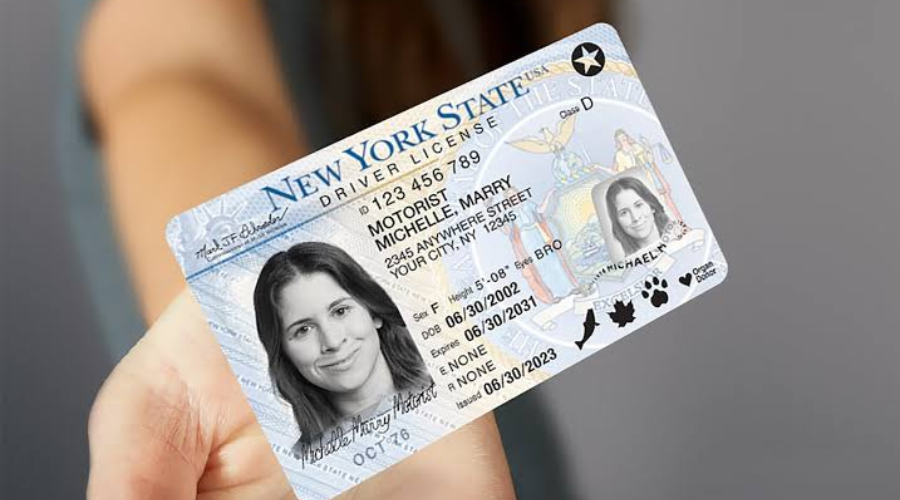
If you are also one of those people who has been putting off getting a REAL ID in 2026, then this is the year you need to pay attention and change that. After years of delays and extensions, the federal enforcement will now be in effect for domestic air travel. It will also allow access to federal facilities.
Millions of Americans have already upgraded their driver’s licenses but many travelers are still unsure about the REAL ID deadline in 2026 in the US.
What is REAL ID?
A REAL ID is basically a state-issued driver’s license or an identification card which is given to those who meet the federal security standards established under the REAL ID Act of 2005.
The easiest way for someone to identify whether a person has a REAL ID or not is by looking for a star marking near the top of the card. This design, of course, varies from state to state but most of the REAL IDs feature either a gold or a black star.
If you wish to know more about the REAL ID deadline in 2026 in the US, REAL ID requirements of 2026 or the differences between a REAL ID vs regular ID at the airport – this guide is for you.
It basically helps to create stronger identity verification standards for air travel, your identity and gives you access to federal facilities too.
What is the REAL ID deadline of 2026?
The important thing to understand here is that the REAL ID deadline of 2026 in the US has already passed.
The federal enforcement began on May 7, 2025 after it was postponed consistently for almost 2 decades.
The standard driver’s license will no longer be accepted by the TSA for domestic travel verification because you will need a TSA REAL ID compliant license for all of them going forward.
In 2026, the focus is more on compliance and enforcing these rules instead of extending the deadline for this.
How do you know if you have a REAL ID?
To figure out if you have a TSA REAL ID compliant license, you need to check your driver’s license or state ID card.
You have a REAL ID if your card has:
- A star symbol in the upper corner
- A notation which indicates that your ID is federal complaint
- REAL ID branding which is used by your state DMV
If you do not see a star or a compliance marking, then it probably means you only have a standard license.
However, some states might have slightly different designs and markings so you should always check the state’s DMV to confirm your status once.
REAL ID requirements in 2026
The main REAL ID requirements of 2026 are:
Identity wise:
- You need the U.S birth certificate
- You also need your U.S passport
- You need a permanent resident card
Social Security Number
- You need to have a social security card
- You also need a W-2 form
- You also need a permanent resident card
Residency
- You need two proofs of address so utility bills can be one
- Bank statements can be one
- Lease agreements work as well
- Mortgage statements are credible as well
These are the standard forms you need to have as part of your REAL ID requirements of 2026.
REAL ID vs Regular ID at the Airport: Rules
The most common questions are about the distinctions between REAL ID vs regular ID at the Airport and if there are any differences.
Real ID
If you have a REAL ID, it will be accepted for:
- All domestic air travel
- Federal facilities at the airport
- Certain secure government locations as well
Regular driver’s license
These will no longer be accepted as the only identification document at the airports and TSA checkpoints so you need to have a REAL ID.
If you want to know more about this or the REAL ID deadline in 2026 in the US, you can also go on their website and re-confirm your details: https://www.usa.gov/real-id
Can you fly without a REAL ID?
According to the information about the REAL ID deadline in 2026 in the US and if you can fly without one – yes you can.
But only if you have another way of verifying your identity at the TSA checkpoints.
Some of the other accepted documents of verification are:
- U.S. Passport
- Passport card
- Global Entry Card
- NEXUS Card
- SENTRI Card
- U.S. Military ID
- Permanent Resident Card
What happens if you do not have a REAL ID?
Well, it depends more on what all identifications you do have instead of a REAL ID.
According to the information on the REAL ID deadline in 2026 in the US and more on the US Government website, the consequences are subjective.
If you have a passport:
You are all right.
A passport is accepted and a verified document of your identity and citizenship for domestic flights and all federal identification purposes.
If you have no acceptable ID:
You can have the following consequences:
- Additional screening
- Identify verification procedures
- Significant delays because of all these processes
- You can also be denied access
TSA REAL ID 2026 enforcement
The current TSA’s REAL ID 2026 enforcement simply means that people need to either show their REAL ID at the TSA checkpoints, or have a document that verifies your identity.
Those flyers who have neither, will be subjected to more screening and some additional identity verification steps too.
Is a REAL ID the same as a passport?
No. A REAL ID is for domestic flights and acts as your state identification.
It is not for international air travel.
A passport can be used for all three together.
How much does a REAL ID cost?
Most DMVs charge a small standard license fee along with an additional fee.
If you need it then they will also charge you for a replacement card fee.
Final thoughts
The REAL ID deadline in 2026 in the US is not a future event but a federal enforcement which has already taken place.
For most Americans, it is worth getting a REAL ID because it lets you travel seamlessly without worrying about TSA checkpoints.




