

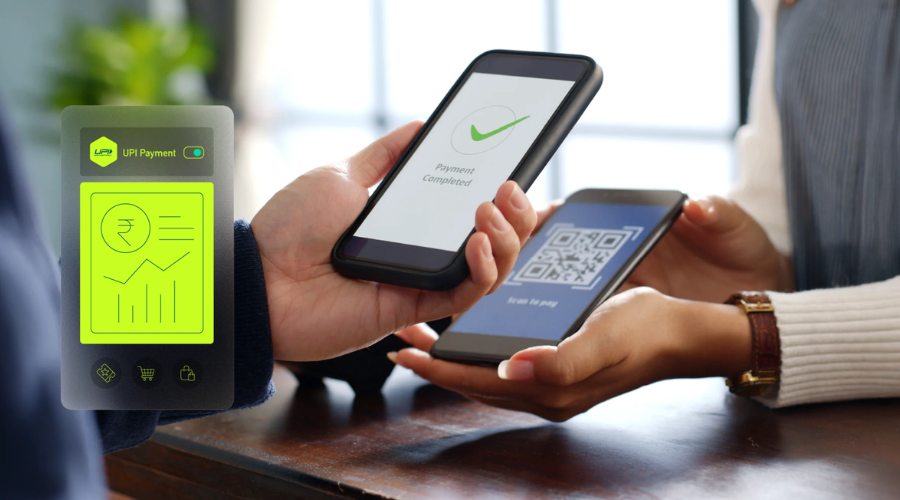
India’s Unified Payments Interface or (UPI) is not just a simple “scan and then pay” feature anymore—you can actually do a lot with these UPI apps now. In fact, UPI apps in 2026 have evolved into a powerful digital financial ecosystem.
In today’s day and age, UPI apps in 2026 have become a complete digital financial ecosystem through which you can make payments, book flights, buy digital gold, and so much more.
UPI has now become a platform which has credit features, international payments, biometric authentication, offline functionality, and voice-powered AI payments as well—making UPI apps in 2026 far more advanced than ever before.
What is the Credit Line in UPI?
One of the biggest UPI upgrades has been the introduction of the Credit Line on UPI. So basically, instead of paying from a savings account, you can now just access pre-approved credit while making these UPI payments using UPI apps in 2026.
It works very similar to Buy Now and Pay Later (BNPL) services where:
- You get a sanctioned credit limit from banks
- Payments happen through the normal UPI app
- Repayment is done later
- No physical credit card is needed
When it comes to apps like PhonePe, Navi, BHIM, and some banking apps, features like these are growing year by year.
The credit line lets you:
- Pay without credit cards
- Build a healthy credit history
- Increase digital spending in Tier 2 and Tier 3 cities
- Make small-ticket lending easier
You do have to be careful not to overspend and to keep shorter repayment windows so you can track your budget properly.
UPI Is Going International
One of the most exciting upgrades in UPI apps in 2026 is global expansion. According to reports, UPI transactions worldwide have doubled in FY 2026 and are now active across multiple countries.
UPI partnerships currently include:
- Singapore
- UAE
- France
- Sri Lanka
- Mauritius
- Nepal
- Bhutan
UPI is also in talks to expand into Japan and Malaysia.
The biggest development is UPI One World, a wallet system that allows foreign visitors to use UPI within India—even without an Indian bank account or SIM card.
UPI Lite and Offline Payments
UPI Lite is a useful feature for everyday payments because it allows small-value transactions without entering a UPI PIN every time.
It is especially helpful for:
- Tea stalls
- Metro tickets
- Parking
- Grocery shops
- Small local purchases
UPI Lite X has also been introduced, supporting offline payments using NFC technology without active internet connectivity.
Tap and Pay: UPI Without QR Codes
The Tap and Pay feature is one of the fastest payment methods introduced in UPI apps in 2026, especially for quick transactions at shops or bars.
Using NFC-enabled smartphones, users can simply tap their phone to pay—similar to Apple Pay or Google Wallet—without opening the camera or scanning QR codes.
Voice and AI-Based UPI Payments
NPCI’s “Hello UPI” is introducing AI-powered conversational payments in 2026.
Users can give voice commands such as:
“Send ₹500 to Rahul”
and the payment is completed instantly.
This feature is especially beneficial for:
- Elderly users
- Regional language users
- Visually impaired users
- People who are not very tech-savvy
Biometric UPI Payments
Another major update in UPI apps in 2026 is biometric authentication. Payments under ₹5,000 can be completed using fingerprint or face unlock without entering a UPI PIN.
This makes transactions more accessible while maintaining strong security.
What May Be Next for UPI?
Wearable payments:
Payments through smartwatches, rings, and fitness bands will make transactions faster and more convenient.
Global merchant acceptance:
Indian tourists may soon use UPI directly at international shops and restaurants without relying on multiple credit cards.
AI financial assistance:
AI will help users track expenses, detect fraud, suggest savings, and automate bill payments—supporting smarter financial decisions.
Final Thoughts
UPI apps in 2026 are evolving far beyond QR code payments. They are building a complete digital financial framework by combining payments, lending, AI, offline technology, biometrics, and global access—making everyday financial decisions faster, safer, and more inclusive.


