

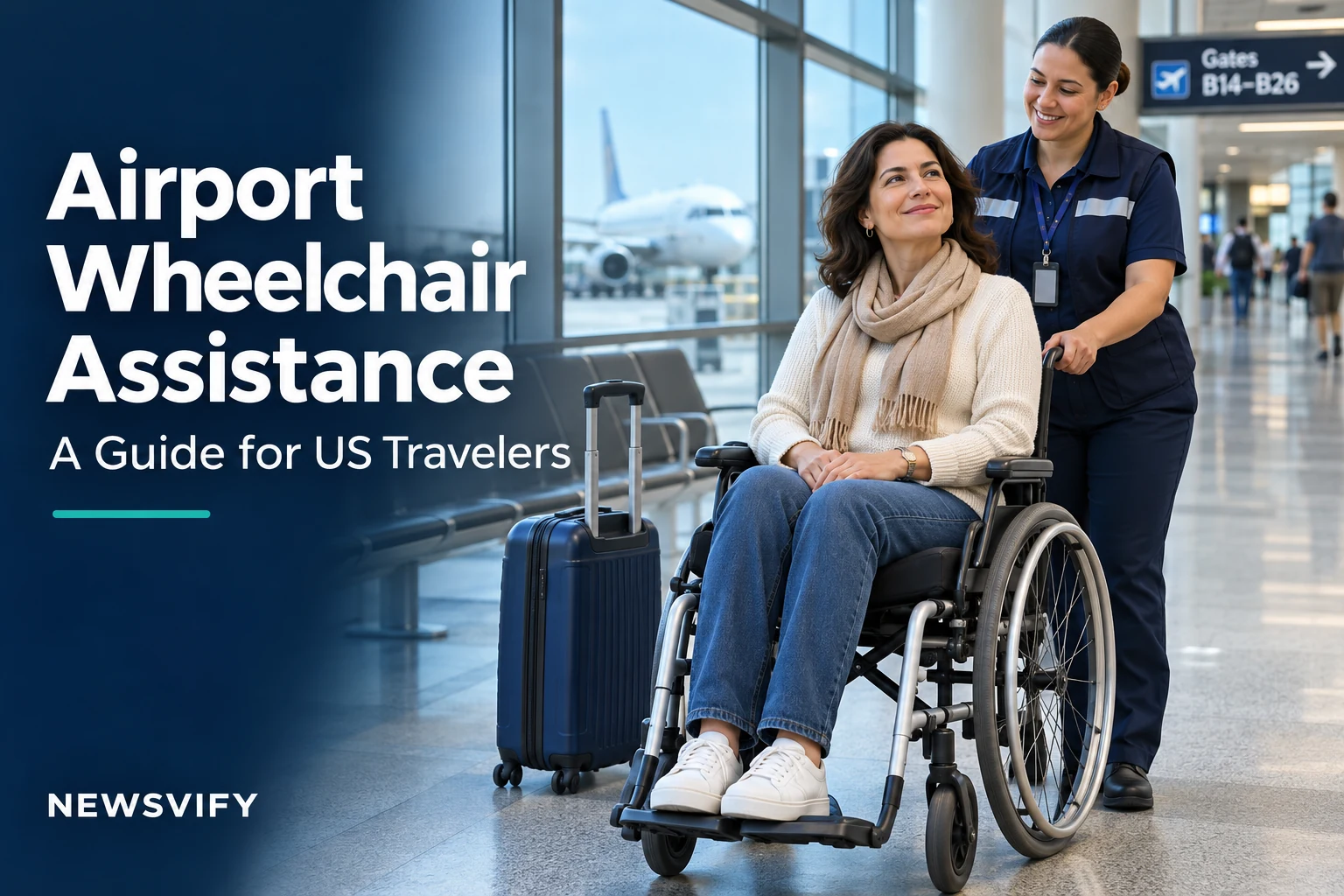
To request airport wheelchair assistance, contact your airline when booking or add the request to an existing reservation. Describe the assistance you need, confirm arrangements for connecting flights, and identify yourself to airline staff when you arrive. The U.S. Department of Transportation recommends making arrangements early, although ordinary wheelchair assistance generally does not require advance notice.
This guide covers requesting assistance, navigating the airport, transferring between flights, and resolving service problems. The federal passenger protections discussed apply to flights operated by U.S. airlines and flights to or from the United States operated by foreign airlines.
How to Request Airport Wheelchair Assistance
- Open your reservation: Look for an accessibility, special assistance, or special services option on the airline’s website or app.
- Describe your needs: Explain whether you need help with airport distances, stairs, or reaching your aircraft seat.
- Check the entire itinerary: Ask which flights and airports have the request recorded.
- Confirm the meeting point: Ask where to report when you arrive.
American Airlines and Delta both provide online request options. If those options do not describe your needs adequately, contact the airline directly.
Request Assistance During Booking or Afterward
| Airline | Where to request assistance | What to check |
| American Airlines | Use “Add special assistance” during booking. For an existing reservation, find your trip and select “Special Assistance” in the Special Services section. | Select wheelchair assistance and contact the airline if your needs require further explanation. |
| Delta Air Lines | After booking, use “Accessible Services” within “My Trips,” or contact Delta’s accessibility team. | Distinguish airport wheelchair service from aisle-chair or onboard wheelchair assistance. |
These are airline-specific examples; other carriers may use different menus. American also states that passengers can tell an airport team member about wheelchair needs on the day of travel.
Read More About Travel Tips
Tell the Airline Exactly What Help You Need
A request for help covering a long terminal distance is different from a request for assistance transferring into an aircraft seat. Delta, for example, describes airport, aisle, and onboard wheelchair services separately.
Sample request for a hypothetical traveler:
I can walk a short distance and transfer into my seat, but I cannot manage long airport walks. Please arrange wheelchair assistance at departure, between my connecting gates, and on arrival. Could you confirm which flights have the request and where I should meet the assistance team?
Adapt the request to your circumstances. If you cannot use stairs or need transfer assistance, say so explicitly.
Who Can Request Assistance, and What Does It Cost?
Wheelchair assistance supports passengers whose disabilities affect mobility. You do not have to be unable to walk at all: DOT specifically advises requesting an airport wheelchair if you cannot walk long distances. The service is not intended as a way to obtain priority access when you do not have a disability-related need.
Temporary limitations can also be relevant. DOT’s Bill of Rights explains that covered disabilities can temporarily or permanently affect activities such as walking.
Required disability-related wheelchair assistance is provided without an additional service charge. Under 14 CFR 382.31, airlines cannot charge for facilities, equipment, or services they are required to provide under the disability regulation, except where the regulation provides otherwise. Optional services outside those requirements may carry charges.
If someone directs you to a paid airport concierge package, ask the airline how to request its required disability assistance separately.
Confirm Assistance for Every Part of Your Trip
DOT recommends confirming accessibility needs with every airline involved in your journey. Use the following questions as a personal planning checklist:
- Departure: Where should I report, and how do I request help from the drop-off area?
- Connection: Who will meet my arriving flight and help me reach the next gate?
- Arrival: Have I requested help through baggage claim to the pickup point?
- Return: Are my return flights covered by the request?
- Changes: If my flight is rebooked, has the assistance request been checked on the new itinerary?
Save any confirmation message or a note of your conversation. Record what was arranged rather than relying on a general “special assistance requested” label.
What Happens When You Arrive at the Airport?
Identify yourself to airline staff as the passenger requesting assistance, even if it is already recorded in your reservation. DOT explains that a reservation note does not tell staff that you have arrived. Allow sufficient time for check-in, screening, and boarding, and alert staff if your gate changes.
Ask the airline beforehand how to make contact if you cannot reach the ticket counter independently. A useful arrival message is: “I requested wheelchair assistance for this flight.” I am at the agreed meeting point and need help reaching check-in.”
Under the terminal-assistance rule, support includes access to areas such as ticket counters and baggage claim. It also includes help transporting carry-on or gate-checked luggage when a disability prevents you from carrying it.
Wheelchair Assistance Versus TSA Cares
| Your need | Who to contact | Preparation |
| Wheelchair assistance through the airport | Your airline | Request the service and confirm where to meet staff. |
| Additional support during security screening | TSA Cares | Request a passenger support specialist at least 72 hours before departure when possible. |
DFW Airport’s official guidance confirms that TSA does not provide airport wheelchair service. TSA Cares can help with the screening process, but requesting support does not exempt a passenger from screening. Its contact number is 855-787-2227.
Connections, Boarding, and Transfers to Your Seat
Moving Between Connecting Gates
For connections covered by the U.S. rule, the airline operating your arriving flight is responsible for providing or ensuring assistance between gates, even when the next flight is on another airline or a separate ticket. The airlines can agree that the departing carrier will provide the service, but the arriving carrier remains responsible for ensuring it happens.
Keep your next flight number and departure gate available. If the connection changes, ask staff to confirm the revised destination before you move.
Getting Onto the Aircraft
If a disability means you need extra time or assistance boarding, identify that need to the gate agent. DOT says qualifying passengers must be allowed to preboard.
An aisle chair is designed to help passengers reach an aircraft seat through its narrow aisle. Tell the assistance team what support you need before a transfer begins, and explain any movement limitations. Delta’s guidance emphasizes communicating your needs to the transfer agent.
Airport mobility support is not a substitute for personal care. Airline staff are not required to provide services such as assistance inside the lavatory, feeding, or medical care. Make separate arrangements if you need those services.
Using Your Own Wheelchair Versus an Airport Wheelchair
| Arrangement | What to discuss |
| Using an airport wheelchair | The assistance you need, the meeting point, and whether you also need an aisle chair. |
| Traveling with your own wheelchair | Device dimensions, battery information where applicable, handling instructions, and arrangements for returning it. |
You may need both arrangements. Transporting your personal wheelchair and providing assistance to you are related but separate parts of the trip.
DOT recommends carrying written assembly and disassembly instructions and photographing your mobility device before travel. Specialized equipment can involve additional preparation requirements.
What to Do If Assistance Does Not Arrive
If you are waiting without clear information, contact an airline representative and explain your location, flight, requested assistance, and boarding time. Ask for a specific next step.
- Ask airline staff for help: Explain what assistance is missing and whether your connection or boarding is approaching.
- Request the airline’s Complaint Resolution Official: The CRO handles disability-related issues and must be available in person or by telephone during airline operating hours.
- Keep a record: Note times, locations, flight numbers, conversations, and the effect on your journey.
- Submit a written complaint: Include your assistance request, what occurred, and whether you contacted a CRO.
Under 14 CFR 382.155, carriers providing service with aircraft of 19 or more passenger seats must provide a substantive written response to covered disability complaints within 30 days of receipt. They are generally not required to respond to complaints sent more than 45 days after the incident, except for complaints referred by DOT. Send your complaint promptly and retain a copy.
You may also file a disability-related airline-service complaint with DOT. Its disability hotline is 800-778-4838. Security-screening issues should be directed to TSA. DOT notes that complaint investigations can take time; a written complaint does not replace requesting immediate help at the airport.
Before-You-Fly Checklist
Before leaving home, make sure you can answer these questions:
- What assistance have I requested?
- Which flights and airports are included?
- Where will I meet staff at departure?
- How will I contact the airline if nobody is at that location?
- Do I need airport transport, boarding assistance, or both?
- Have I separately addressed screening support or personal-device arrangements?
- Can I access my itinerary and confirmation notes without an internet connection?
Keep this information together so you can explain your needs clearly at each stage of the journey.
Related Articles:
– What US & UK Travelers Need to Know
– US Road Trips
– Thanksgiving Travel
Frequently Asked Questions
Can I Request Wheelchair Assistance After Booking?
Yes. American and Delta provide options for adding assistance to an existing reservation. Contact your airline if the online options do not cover what you need.
Do I Have to Request Assistance 48 Hours Before Flying?
Ordinary wheelchair assistance generally does not require advance notice. Airlines may encourage early requests, while certain specialized accommodations have specific notice requirements. Check the requirements for your particular equipment or service.
Can I Use Airport Wheelchair Assistance If I Can Walk Short Distances?
Yes, if you have a disability-related mobility need. Being able to walk a short distance does not mean you can manage a long terminal journey. Explain the assistance you need to airline staff.
Does TSA Cares Arrange My Wheelchair?
No. Request wheelchair service from your airline. TSA Cares provides support related to security screening.
Does Wheelchair Assistance Include Personal Care?
It does not include all personal-care needs. If you require help with toileting, eating, or medical care, plan that support separately.
Can a Family Member Request Assistance for Me?
Yes. The terminal-assistance regulation recognizes requests made on a passenger’s behalf. Ask the airline what reservation information or authorization it needs, and make sure the arrangements reflect the traveler’s preferences.


