
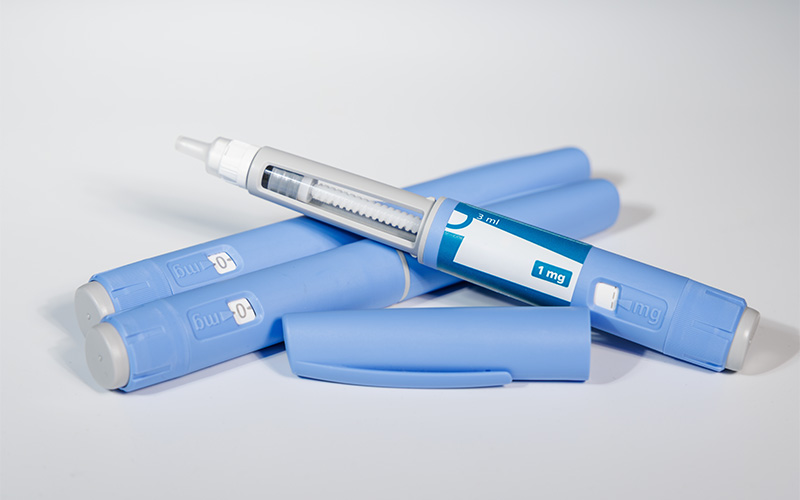
The world evolves at a rate faster than we could have expected – with quick and strategic advancements happening in the mathematical, astronomical, technological and every other field that we can think about. The medical field is also one such sector that has boomed in the last 15 years. GLP – 1 drugs is one such advancement – it is basically a copy of a natural hormone in your body which is called the glucagon-like peptide-1.
This hormone helps maintain and control three things in your body: your blood sugar, hunger and digestion. Everyone has heard about Ozempic and Wegovy that help with weight loss, right? They are basically lab-made versions of this exact hormone that control your hunger.
How do GLP -1 Drugs work?
Many people believe that these articles burn fat directly and that’s how you lose weight. But in reality, they change how your body behaves and reacts. Firstly, it makes you feel full faster so you naturally start eating less. It ensures that it slows down how quickly your food leaves your stomach.
Secondly, it reduces hunger signals which basically create less cravings and less urges to eat more (whether junk or not).
Thirdly, GLP – 1 drugs in 2026 also help control the release of insulin within your body and keep the glucose levels stable. They are becoming a defining shift in modern healthcare because what started off as a treatment for Type 2 diabetes has now turned into a multi-billion dollar industry that affects weight loss, cardiovascular health and also human behaviour itself.
What are some medical uses of GLP – 1 drugs in 2026?
While there is multiple research happening all over the world on its uses and its side effects, some of them are resulting in the GLP-1 drugs being used apart from just weight and diabetes.
Some other uses for them are:
Cardiovascular health:
Some of the more recent studies have shown that the GLP-1 drugs in 2026 can be used to reduce heart attacks along with reducing the inflammation caused by heart diseases. Heart diseases still remain as one of the top causes of death globally. It is still very early to say for sure, however if these drugs consistently show good results, they could become an integral and important part of preventative cardiology for the foreseeable future.
Addiction related behaviour:
An unexpected finding of the GLP – 1 drug in 2026 was also related to reducing and controlling addictive behaviours. Early findings have actually shown a reduction in cravings (not only for food but also for nicotine or alcohol) because it blocks the pathways in the brain that are responsible for impulse control and also behavioural regulation.
Brain health and neurological conditions:
Because of its multi-dimensional usage – neurologists and researchers are also exploring if this GLP -1 drug can be used for neurodegenerative disorders or not. It is still in the early stages but it does open up the possibility of being helpful for treating cognitive decline and inflammation within the brain as well.
So, what is the real reason behind the GLP – 1 boom?
The era of the Ozempic’s new uses and the usage of WeGovy beyond weight loss started right after COVID-19. It is not an accidental rise but instead a rise backed by scientific, economic and even cultural factors. The biggest turning point was the breakthrough clinical trial which showed a 15% loss in body weight.
The breakthrough of Ozempic and WeGovy
It happened when medications such as these two showed a massive decline in weight in less time – with a success rate of reducing at least 14-15% body fat while controlling blood sugar levels as well. Before this happened, the major weight loss drugs in the market were either too inconsistent or had limited results only.
GLP – 1 in 2026 became the first strategic, structured and effective weight loss medication that yielded results within weeks.
Obesity was reclassified as a medical condition:
A culture shift was seen within the world which reduced centuries worth of stigma around obesity. Earlier, it was seen as a “personal choice” that people were making but now it is recognised as a chronic metabolic disease which can be cured through medications such as Ozempic and WeGovy.
Investment by pharmaceuticals:
Multiple international pharma companies such as Novo Nordisk and Eli Lilly have invested heavily in large scale global trials to win the race of dominating the market as wide as heart diseases, addictions, brain health and finally weight loss.
This level of competition is accelerating innovation and a new found awareness.
Social media and its influence:
Ozempic’s new uses and the use of WeGovy beyond weight loss has led to GLP – 1 drug becoming culturally visible throughout the world. The “before” and “after” transformations of celebrities like Mindy Kaling and Karan Johar went viral on instagram and twitter.
Criticisms and Concerns:
As is the case with almost every medication out in the world, GLP – 1 drugs also have their own criticisms and health concerns.
Long-term effects:
Multiple users have come out and spoken about the side effects of Ozempic and WeGovy – with one of the most infamous ones being the loss of vision in one or both eyes. Moreover, some researchers have said that consistent use of the GLP – 1 drugs can lead to kidney failures as well.
Accessibility of these GLP – 1 drugs:
These drugs do not come cheap – with one injection costing more than 8,000 rupees or around 90$. The insurance does not cover the cost of weight loss injections for most countries so access to these drugs is very limited and only for the “higher” earning populations.
Overmedicalization of this drug:
Many people have come out and criticized the concept of changing a weight loss drug into a medical drug for the profit and benefit of pharmaceutical companies. People are asking the question – “why are we turning lifestyle problems into serious pharmaceutical problems?”
GLP – 1 drugs in 2026 have changed the way the world views weight loss and the conversations around it as well. It is a possibility that from 2026 onwards, more research shows the multidimensional use of Ozempic or WeGovy.
The main question is not about if these drugs work or not. It’s also about how far will the public influence extend to – and how responsibly will that even be managed?
